Best Modular Capsule House Insights from China Import Export Fair?
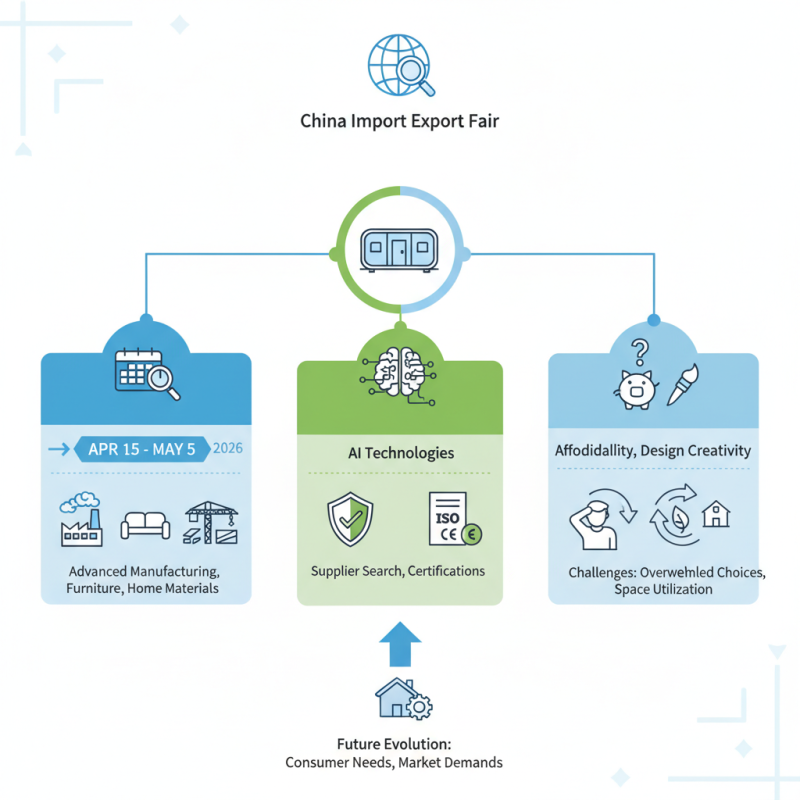
The 139th China Import and Export Fair offers exciting insights into the innovative world of Modular Capsule Houses. These compact living solutions represent the future of housing, emphasizing efficiency and sustainability. Held from April 15 to May 5, 2026, the fair showcases advanced manufacturing, furniture, and quality home materials.
As visitors explore the vast 1.55 million square meters of exhibition space, they will notice the integration of AI technologies. This enhances the experience by allowing quick searches for suppliers with specific certifications, like ISO and CE. Modular Capsule Houses are not merely functional; they reflect a growing trend towards minimalist living and environmental awareness.
However, challenges remain. The need for affordability and design creativity must be addressed. Potential buyers may find the choices overwhelming or struggle with space utilization. Learning from these insights can guide the evolution of Modular Capsule Houses, better aligning with consumer needs and market demands.
Best Modular Capsule House Insights from China Import Export Fair
The modular capsule house market is evolving rapidly, as seen at the China Import Export Fair. These compact homes are designed for efficiency and sustainability. Recent data suggests that modular homes can reduce construction waste by up to 70%. This statistic resonates deeply with eco-conscious consumers.
Innovations unveiled at the fair included advanced materials that enhance durability. Lightweight composites were showcased, promising greater energy efficiency. However, the shift toward these new materials raises concerns about long-term maintenance. Will they perform as expected over time?
Market analysis indicates a rising demand for modular designs. Approximately 35% of buyers are looking for customizable options. While this trend is promising, it poses challenges for manufacturers. Balancing cost and quality remains a critical concern. As the market matures, companies may need to rethink their supply chains to stay competitive.
Understanding Modular Capsule Houses: Design Trends and Innovations
Modular capsule houses are gaining attention for their unique design and functionality. They offer innovative solutions for urban living and small spaces. These houses often feature compact layouts with smart storage options. Common design elements include foldable furniture and multifunctional spaces. Many builders focus on sustainability, using eco-friendly materials. However, these homes can sometimes sacrifice comfort for efficiency.
The popularity of modular designs has led to exciting trends. Urban architects are now blending aesthetics with practicality. Bright colors and clean lines characterize many new models. Yet, they are not without challenges. Some designs may feel cramped or lack privacy.
The concept of modular living is still evolving. Innovations continue to emerge, but not all ideas succeed. Flexibility and adaptability are crucial in this market. Designers must listen to feedback to improve future creations. Ultimately, the path to a perfect modular capsule house requires continuous learning and adjustment.
Modular Capsule Houses Insights from China Import Export Fair
This chart illustrates the trends in modular capsule house design and innovations highlighted at the China Import Export Fair. It includes data on various design features and their popularity among visitors.
Market Demand for Modular Housing in China: Key Statistics and Analysis
The modular housing market in China is rapidly evolving. Recent statistics reveal a significant increase in demand. Urbanization is a driving factor. As more people move to cities, housing needs change. Cost-effective solutions are essential. Modular capsule houses offer flexibility and affordability.
However, challenges persist. Quality control issues are common. Construction methods often vary by region. Not all manufacturers meet high standards. This inconsistency can lead to dissatisfaction. Buyers need to conduct thorough research. Trends show a growing interest in sustainable housing. Eco-friendly materials are becoming more popular. Yet, availability can be limited.
Consumer preferences are shifting. Compact living has become trendy. People seek functional designs that maximize space. Smaller homes require smart storage solutions. This can be a challenge for modular designs. Adapting to these needs is crucial for success. The market shows promise, but it is not without its obstacles.
Sustainability in Modular Capsule Construction: Eco-friendly Materials Usage
Sustainability is crucial in the modular capsule construction sector. Eco-friendly materials play a significant role. In China, over 40% of construction waste contributes to pollution. Using sustainable resources helps mitigate this issue. The industry is now embracing recycled materials, such as reclaimed wood and recycled metals. These options reduce the environmental footprint.
Studies show that bamboo is gaining popularity in construction. It is fast-growing and requires less energy to process than traditional wood. In fact, bamboo’s tensile strength is comparable to steel. This makes it an excellent choice for modular designs. However, sourcing bamboo responsibly is vital.
Another promising development is the integration of energy-efficient systems. For example, solar panels can be incorporated seamlessly into capsule designs. Reports indicate that buildings using solar energy can reduce overall energy costs by up to 40%. Despite these advantages, challenges remain. Not all manufacturers prioritize sustainability, and costs can be higher for eco-friendly materials. There is much room for improvement in the industry’s commitment to green construction practices.
Technological Advancements in Modular Homes: Smart Solutions for Efficiency
Modular homes are becoming increasingly popular in China, especially at events like the Import Export Fair. They represent a blend of innovation and practicality. These homes are designed using advanced technology, which enhances their efficiency. Smart home solutions can now control lighting, heating, and security systems seamlessly. This integration is not just a trend; it’s a necessity for modern living.
Customization options are another fascinating aspect. Many modular homes offer flexible designs that cater to personal needs. However, not all designs are perfect. Some may lack adequate insulation, while others don’t maximize space effectively. It’s crucial to weigh the pros and cons of each option. A modular home should not only look good but also serve its purpose efficiently.
Overall, while modular homes are a leap forward, they are not without challenges. Addressing these imperfections can lead to better designs and functionality. The focus should be on creating homes that are both smart and livable. Through continuous improvement, the future of modular living can be bright and sustainable.
Conclusion
The article "Best Modular Capsule House Insights from China Import Export Fair" explores the growing trends and innovations surrounding Modular Capsule Houses highlighted at the recent trade fair. It delves into the latest design trends, showcasing how these compact homes are becoming increasingly popular due to their space efficiency and modern aesthetics. Furthermore, the article provides key statistics on market demand for modular housing in China, emphasizing a significant rise in interest as urbanization continues to accelerate.
In addition to market insights, the article discusses sustainability in modular capsule construction, highlighting the use of eco-friendly materials that minimize environmental impact. Technological advancements, such as smart solutions for energy efficiency, are also examined, illustrating how innovation is shaping the future of modular homes. Finally, it addresses the export opportunities available for Modular Capsule Houses, offering insights from industry leaders on the potential for international growth in this sector.