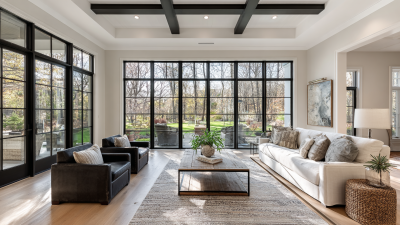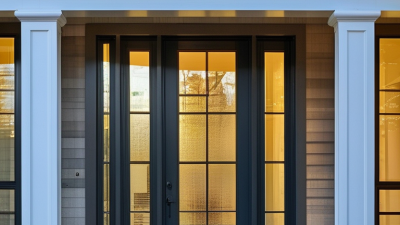
Choosing reliable China top transom window manufacturers and suppliers requires more than comparing catalog prices. A transom window affects daylight, ventilation, privacy, and the visual balance of a doorway or interior partition. In real projects, small details matter. Frame depth, glass thickness, opening direction, drainage design, and hardware quality can change installation results.
This guide introduces manufacturers with practical experience in producing aluminum, uPVC, timber, and thermally broken transom window systems. It considers factory capabilities, product customization, quality control, export experience, and communication standards. Reliable suppliers should provide clear drawings, material specifications, test reports, and realistic production schedules. They should also explain limitations instead of promising everything.
Look closely.
A professional factory normally supports sample development, color matching, glass options, packaging, and after-sales communication. Site conditions should guide the final choice. A narrow hallway may need fixed glazing, while a humid room may require improved ventilation and corrosion-resistant hardware. Energy performance also depends on the complete window assembly, not the frame alone.
Supplier information is not always presented consistently. Some websites show polished projects but offer limited technical evidence. That gap deserves attention. Buyers should verify certifications, inspect samples, review previous export cases, and confirm tolerances before placing a large order. This article aims to make that process clearer. It does not treat one manufacturer as suitable for every project. A dependable partnership usually develops through questions, documentation, testing, and honest adjustments. Mistakes can still happen, especially when measurements are incomplete. Careful preparation reduces them.
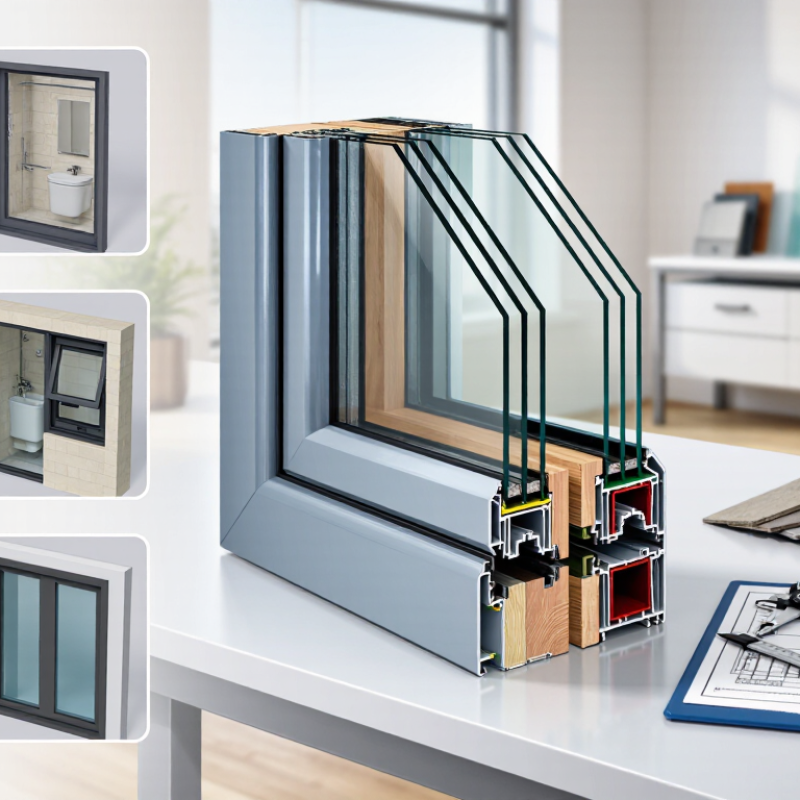
A transom window is a glazed opening installed above a door or larger window. It may be fixed or operable. Fixed types bring borrowed daylight into hallways, bathrooms, offices, and stairwells. Operable types can release warm air through high-level ventilation. In a traditional entryway, imagine a narrow glass panel casting a soft rectangle of light across the floor. The detail looks simple, but proportions matter.
A common mistake is treating every transom as decorative. Its height, opening direction, glass selection, and frame depth should match the building’s climate and use. The U.S. Department of Energy reports that windows can account for 25–30% of residential heating and cooling energy use. Poorly sealed transoms may therefore create noticeable drafts above doors. Low-emissivity glazing, insulated frames, and tested air-sealing details can reduce this weakness.
The International Energy Agency’s 2023 Global Status Report for Buildings and Construction states that buildings use about 30% of global final energy and produce around 26% of energy-related emissions. Transoms cannot solve that challenge alone. They can support passive daylighting and reduce daytime lighting demand when carefully positioned. Manufacturers and suppliers should provide U-value, solar heat gain, visible transmittance, and air-leakage data. These figures help architects compare products rather than trust attractive photographs. Yet, real performance still depends on installation quality. A beautiful transom with a careless perimeter seal is not a reliable window.
China’s transom window manufacturing industry combines large-scale production with increasingly precise customization. China’s National Bureau of Statistics reported construction industry output above RMB 31 trillion in 2023. This creates strong demand for windows, façade systems, and renovation products. Manufacturers commonly work with aluminium, uPVC, and engineered wood. Aluminium remains popular for slim frames and large glass areas. Factories also offer thermal breaks, laminated glass, insect screens, and concealed drainage.
Energy performance is becoming a practical requirement, not just a selling point. The China Building Energy Consumption Annual Report 2023 placed building energy use at roughly one-fifth of national energy consumption. This encourages better frame insulation, airtight seals, and low-emissivity glass. China’s mandatory standard GB 55015-2021 also raises expectations for building energy efficiency. Export-oriented factories usually add testing for air leakage, water resistance, wind pressure, and hardware durability. However, quality can vary between production lines. Large capacity does not always mean consistent assembly.
Tips: Request test reports linked to the exact window series. Check corner welding, gasket compression, glass markings, and drainage holes. Ask for a sample before approving mass production. Keep this step. It prevents expensive surprises. Buyers should also confirm tolerances, packaging details, and installation guidance. The overlooked problem is often installation, not the window itself. Supplier claims need independent checking.
Choosing a transom window manufacturer requires more than comparing online prices. Review factory experience, product range, and documented quality procedures. Ask for evidence. A reliable supplier should provide project references, material specifications, and clear production photographs.
Request samples with the same frame, glass, seal, and hardware proposed for your project. Check corner joints, surface finish, drainage holes, and opening alignment by hand. Details matter. Test the sample for smooth operation and visible air gaps. If possible, arrange a factory audit or independent inspection before shipment. This can reveal crowded storage areas, weak packaging, or inconsistent assembly.
Professional evaluation also includes performance data. Confirm thermal values, glass configuration, wind-load results, and water-resistance testing for your installation location. Verify whether certificates match the actual model, not a similar product. Discuss tolerances, color variation, replacement parts, warranty terms, and after-sales response times in writing. A low quote may exclude installation guidance or protective packaging.
Communication is another practical test. Send technical drawings and observe how carefully the supplier identifies missing dimensions. Strong manufacturers ask useful questions instead of accepting every detail without review. Still, no evaluation is perfect. A polished sample can mislead, and a factory visit shows only one production day. Keep payment milestones linked to inspections, and record every agreed specification before manufacturing begins.
Transom windows bring daylight above doors and interior partitions without using floor space. Common types include fixed fanlights, operable awning units, and glazed panels with side vents. Fixed units maximize daylight, while operable designs support controlled ventilation. Small openings matter. Grand View Research valued the global windows market at about USD 208.7 billion in 2023, with continued growth projected through 2030. This expansion encourages more specialized transom designs.
Material selection affects appearance, maintenance, and thermal performance. Aluminum provides slim sightlines and strong structural support, especially for wide openings. uPVC offers moisture resistance and relatively simple maintenance. Wood creates a warmer visual character but needs careful finishing near humid areas. Fiberglass can provide dimensional stability, although availability and fabrication costs may vary. The U.S. Department of Energy reports that windows can account for 25–30% of residential heating and cooling energy use. Actual performance depends on glazing, installation, orientation, and climate. Reports simplify this reality.
Customization may include exact frame dimensions, low-emissivity glass, laminated safety glazing, gas-filled units, thermal breaks, screen systems, colors, and hardware finishes. Experienced suppliers should provide section drawings, structural calculations, test records, and clear tolerance requirements. Ask how air leakage, water penetration, and wind resistance were evaluated. A polished catalog is not enough. In practice, some suppliers overpromise unusual sizes or finishes, so buyers should confirm production samples and installation details before approval.
Selecting a reliable Chinese transom window supplier requires more than comparing online prices. A polished catalog is not proof. In project sourcing, I check factory experience, product drawings, and responses to unusual dimensions. Ask how the supplier handles fixed, awning, or operable transom designs. Request section drawings showing frame depth, glazing pockets, drainage paths, and hardware positions. These details reveal technical competence quickly.
A serious supplier should provide material specifications, test reports, and traceable quality records. Confirm the frame alloy, coating thickness, glass configuration, seals, and expected tolerances. For coastal projects, ask about corrosion resistance and finish testing. For high-rise work, review wind-load calculations and safety glazing requirements with a qualified local professional. Samples matter. Inspect corner joints, gasket fit, opening movement, and surface consistency by hand. Photos can hide small defects.
Communication is another practical test. Send one detailed inquiry and compare the reply. Does it answer every point, state lead times clearly, and identify exclusions? A dependable partner accepts controlled revisions and records approvals before production. I prefer a small pilot order before a large shipment. It exposes packaging weaknesses and measurement misunderstandings early. Even experienced buyers miss details sometimes. Recheck dimensions, installation clearances, labels, spare parts, and after-sales responsibilities. A lower quote may still cost more when corrections, delays, or unsuitable components appear. Choose evidence over confident promises.
| Evaluation Dimension | Recommended Benchmark | Verifiable Supplier Evidence | Suggested Weight | Score Guide |
|---|---|---|---|---|
| Product and Application Fit | Suitable for the required transom configuration, frame material, glazing type, opening method, and installation position. | Technical drawings, section details, sample approval records, and a written application recommendation. | 15% | 1–5 |
| Air Leakage Performance | Performance should be tested under the target market’s applicable window standard. ASTM E283 is commonly used for laboratory air-leakage testing. | Test report showing specimen size, test pressure, measured air leakage, laboratory details, and test date. | 10% | 1–5 |
| Water Penetration Resistance | The test pressure should match the project requirement. ASTM E331 and ASTM E547 are recognized water-penetration test methods for windows and doors. | Water-penetration report, test pressure, spray duration, specimen configuration, and pass/fail result. | 10% | 1–5 |
| Structural and Wind-Load Capacity | Design should be checked against the project wind load, span, frame profile, anchorage, and glazing weight rather than relying only on a generic catalog value. | Structural calculations, profile inertia data, glazing calculations, and project-specific load-test results where required. | 12% | 1–5 |
| Thermal Performance | U-factor, solar heat gain coefficient, and visible transmittance should be selected according to the destination climate and building-code requirements. NFRC 100 and NFRC 200 are widely used rating methods in North America. | Whole-product thermal calculations or certified ratings identifying frame, spacer, glass, and operating configuration. | 10% | 1–5 |
| Glass and Safety Compliance | Safety glazing, thickness, edge treatment, spacer type, and glass composition should comply with the destination market’s applicable building and safety requirements. | Glass certificates, safety-glazing documentation, IGU specifications, heat-treatment records, and material traceability. | 10% | 1–5 |
| Quality Management System | A documented quality-management system with controlled purchasing, production inspection, nonconformance handling, and corrective actions. ISO 9001 certification is useful supporting evidence. | Valid certificate, certificate scope, issuing-body verification, inspection procedures, and corrective-action records. | 10% | 1–5 |
| Applicable Product Standards | The supplier should identify the exact standard used for design and testing, such as EN 14351-1 for external windows and doors in the European market or AAMA/WDMA/CSA 101/I.S.2/A440 for North American products. | Standard reference, test classification, product scope, laboratory accreditation, and report-to-product traceability. | 8% | 1–5 |
| Material and Finish Durability | Profiles, hardware, seals, coatings, and fasteners should be suitable for the project’s moisture, UV, corrosion, and temperature conditions. | Alloy or material specifications, coating test results, sealant data sheets, hardware grade, and corrosion-resistance information. | 7% | 1–5 |
| Factory Inspection and Traceability | Every batch should be identifiable through production dates, material batches, inspection records, and packing references. | Incoming-material inspection, in-process checklists, final inspection reports, serial or batch codes, and photo records. | 6% | 1–5 |
| Sampling and Pre-Shipment Control | A physical sample or approved first article should be completed before mass production, followed by documented pre-shipment inspection. | Approved sample, inspection checklist, dimensional report, packaging photos, and independent inspection option. | 5% | 1–5 |
| Lead Time and Production Capacity | The supplier should provide a written schedule covering drawing approval, sampling, production, inspection, and shipment, with capacity aligned to the order quantity. | Capacity statement, production schedule, milestone dates, raw-material planning, and historical on-time delivery records. | 4% | 1–5 |
| Warranty and After-Sales Support | Warranty terms should clearly define coverage, exclusions, claim procedures, replacement responsibilities, and response times. | Signed warranty document, spare-parts policy, installation guidance, service contact, and documented complaint-resolution process. | 3% | 1–5 |
| Total Evaluation Weight | 100% | Maximum: 5.0 | ||

© 2025 RWC. All Rights Reserved. | Privacy Policy | Contractor’s License Number: 13VH00710200 | Sitemap | Areas Served